Green Light, Yellow Light, Red Light: The Symptom Guide Your Family Cabinet Is Missing
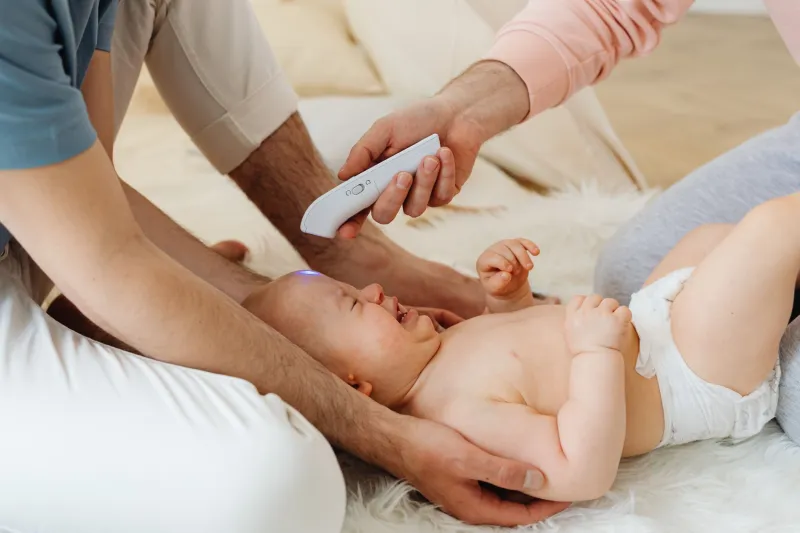
It's 7:40 on a Tuesday morning. Your daughter says her stomach hurts. Your father, who lives with you, mentioned last night that his headache "won't quit." And you have a work call in twenty minutes. Every family hits this moment — the one where you're standing in the kitchen Googling symptoms on a phone with one thumb, trying to decide between "it's probably nothing" and "we should probably go."
The truth is, most everyday symptoms really are fine to watch at home. But a few are not, and the tricky part is that the line between the two isn't always obvious — especially when the person with the symptom is a toddler or an 82-year-old, whose bodies don't send the same warning signals ours do.
That's why we love the idea of a family symptom chart: a single laminated page taped inside a kitchen or bathroom cabinet that answers the question before you're too stressed to think. Think of it as a traffic light for your household.
The Three Colors, Explained
Green — Watch and wait. These are symptoms that, in an otherwise healthy person, usually resolve on their own or respond to basic home care.
- A low-grade fever (under 102°F in adults) with no other troubling signs
- A mild headache after a long day, dehydration, or skipped meals
- A stomach ache with a known cause — last night's chili, nerves before a big test
- A small rash that doesn't spread, itch mildly, and came after contact with something new (detergent, poison ivy on a hike)
For green-light symptoms, the plan is rest, fluids, and a check-back window. Reassess in 24 hours. If things haven't improved — or have gotten worse — the symptom earns a promotion to yellow.
Yellow — Call the doctor today. This is the tier families skip most often, usually because they feel silly "bothering" the office. Don't. Nurse lines exist precisely for this.
- A fever above 102°F that lasts more than two days, or any fever in an infant under 3 months (that's actually a red light — more below)
- A stomach ache that's lasted more than 48 hours or keeps coming back
- A rash that's spreading, painful, or accompanied by fever
- A headache that's different from your usual ones — new pattern, worse intensity, or paired with vision changes
- A sore throat with trouble swallowing
Red — Go to the ER or call 911. Some symptoms aren't for triage. They're for action.
- Chest pain or pressure, especially with shortness of breath or arm/jaw discomfort
- Sudden weakness on one side, slurred speech, facial droop, or confusion — stroke signs, and time matters enormously
- The worst headache of someone's life, arriving like a thunderclap
- Trouble breathing
- Uncontrolled bleeding
- A fever above 104°F, or any fever in a baby under 3 months
- Severe, sudden abdominal pain
Why Age Rewrites the Rules
Here's where a generic internet chart falls short and a family-specific one earns its place on the cabinet door.
Kids: Children compensate beautifully right up until they don't. A toddler with a 101°F fever who's drinking, playing, and complaining loudly is usually less concerning than a quiet, listless child with a 99.5°F temp. Activity level is your best signal. And any fever in an infant under 3 months skips the whole color system — it's an automatic red light, because newborns can't localize infections.
Older adults: The opposite problem. A person in their 80s can have a serious urinary tract infection or early pneumonia and show almost no fever at all — sometimes the first sign is sudden confusion or a fall. If your older parent seems "just off" — foggy, unsteady, eating less — that vague wrongness is itself a yellow light, and often worth a same-day call. With older adults, a change in baseline matters more than any single number.
Building Your Chart: A Weekend Project, Not a Dissertation
You don't need medical training to make a useful one. Grab a sheet of paper and divide it into three columns. Under each color, list the symptoms that apply to your household. Does someone have a heart condition? Chest symptoms jump straight to red. Is there a baby in the house? Add the infant fever rule in bold letters.
Then add three lines at the bottom:
- Our doctor's after-hours number: ______
- Our pharmacy's number: ______ (pharmacists are wildly underused for quick medication questions)
- Nearest ER and urgent care addresses: ______
Write in the actual numbers. In the moment, nobody wants to hunt for them.
A Few Habits That Make the Chart Work
Keep a running log. When a green-light symptom lingers, jot down the time, temperature, and what you gave. That two-line note turns a frantic 2 a.m. call into a useful one — you'll be able to tell the nurse exactly what happened and when.
Trust the follow-up instinct. The chart isn't a promise that nothing will change. Symptoms get promoted between colors all the time, and moving a symptom up a tier isn't overreacting — it's the system working.
Revisit it twice a year. When you change the smoke detector batteries, glance at the chart. New baby? New diagnosis? New grandparent in the guest room? Update it.
The Real Point of the Chart
A symptom chart won't diagnose anyone, and it's no substitute for a doctor who knows your family. What it does is quieter and, honestly, more valuable: it replaces 3 a.m. panic with a plan. It gives you permission to wait when waiting is safe, and permission to move fast when fast matters.
Print it, laminate it, tape it inside the cabinet above the coffee mugs. Your future, worried, half-awake self will be grateful you did.


