When the Grid Goes Quiet: A Caregiver's Plan for the Machines That Keep Someone Well
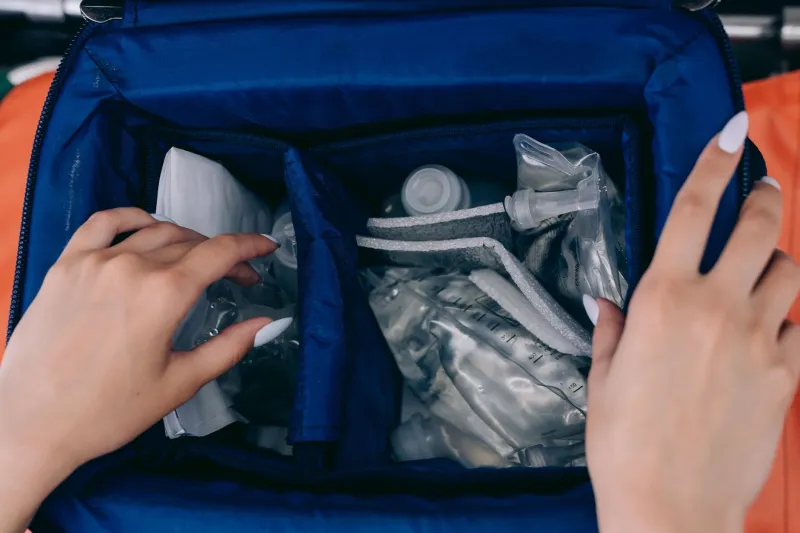
For most families, a power outage means candles, a deck of cards, and a fridge you're not supposed to open. For a caregiver, it can mean a countdown clock. Insulin has to stay cold. An oxygen concentrator has to keep humming. A CPAP has to run so someone can breathe through the night. Dialysis doesn't reschedule itself because a tree took out the lines.
The good news is that outage planning is not complicated. It is mostly a matter of knowing what has to stay on, what you'll need when it doesn't, and who you'll call. Do that work on a quiet afternoon, and the dark night gets a lot less frightening.
Start With a Blunt Inventory
Before you buy a single battery pack, make a list of every piece of medical equipment in the house and what it actually needs. Not just the name of the device, but the power draw, the battery life, the oxygen flow rate, and whether it needs water as well as electricity. A home oxygen concentrator can pull as much power as a small appliance. A CPAP with a heated humidifier uses far more than one without. A home dialysis machine may need both power and a steady water supply.
Write down the medications that need refrigeration, too, and ask your pharmacist a very specific question: what is the safe temperature range, and what do we do if the fridge warms up? For most refrigerated medicines, the target is roughly 36 to 46 degrees Fahrenheit, but your pharmacist is the person who should confirm that for your prescription.
Keep this inventory in two places: on the refrigerator and in a go bag. Add the phone numbers for your utility company, the medical equipment supplier, the dialysis center, the pharmacy, and your care team. If a caregiver is ever away, this list is what lets someone else step in without a scavenger hunt.
Your Refrigerator Is a Medical Device Now
A fridge full of food is one thing. A fridge holding medication is another. Buy an inexpensive refrigerator thermometer and keep it where you can see it. When the power goes out, leave the door closed. A full refrigerator generally holds its temperature for about four hours; a full freezer can hold for a day or two. Every time you open the door, you spend some of that cushion.
If the outage stretches longer, move refrigerated medication into a cooler with ice packs. Wrap the ice packs in a towel so the medicine doesn't sit directly against them. Never put insulin or other injectables in direct contact with ice, and never freeze them to be safe. Cold damage can be as bad as heat damage.
When in doubt, call the pharmacist before you use or toss anything. They can tell you whether the medication is still within its safe range or whether you need a replacement. This is also a good time to ask whether any of your medications have a room-temperature backup plan already built into the prescription.
Oxygen, CPAP, and the Machines That Breathe
If someone in your home uses oxygen, talk to the supplier about backup tanks and a portable concentrator before storm season. Ask how many hours the tanks will last at the prescribed flow rate, and write that number down. A concentrator that stops running is not a reason to improvise with a car battery or a generator cord run through a window. Call the supplier first.
For CPAP users, the safest backup is a manufacturer-approved battery pack sized for your machine and your settings. If you use a generator, read the manual and follow it exactly. Generators should never run indoors, in a garage, or on an attached porch. Carbon monoxide is odorless and kills quickly. Put a battery-powered carbon monoxide alarm near sleeping areas if you don't already have one.
It also helps to know the manual fallbacks. If a device has an internal battery, learn how long it lasts. If a machine has a lower-power mode, know how to switch to it. And keep a written note of what to do if the equipment fails entirely, including which hospital or clinic to call.
Dialysis Doesn't Take a Snow Day
If someone in your family is on dialysis, the outage plan starts with the dialysis center, not the hardware store. Ask the center for its emergency plan and for the name of a backup facility. In many regions, dialysis patients can also contact their local ESRD Network for help finding an open center during a disaster.
Missed treatments are serious, but they are not the only risk. Patients on dialysis often need to follow a three-day emergency kidney diet if treatments are delayed, which usually means watching fluid, sodium, potassium, and phosphorus. Ask your care team to write down a specific plan for your family before you need it. Do not guess at portion sizes or skip medications on your own.
For home dialysis, ask the clinic how the machine behaves during an outage and what to do about water supply. Some home machines need a steady water source; others have different requirements. Get the answer in writing, and keep a printed copy with the machine.
Register Before You Need To
Many utility companies keep a medical baseline or life-support registry for customers who depend on electricity for medical reasons. Call your utility and ask. Some cities and counties also keep a voluntary special-needs registry through emergency management. These lists don't guarantee a faster fix, but they can help responders know who needs a wellness check.
While you're making calls, line up a neighbor or nearby friend who can knock on the door during an extended outage. Exchange phone numbers and agree on a simple check-in time. Caregivers who live at a distance should be on that list, too.
Build the Kit Once, Then Check It Twice a Year
Your outage kit doesn't need to be elaborate. It needs to be findable in the dark. Put together a bag or bin with a printed medication list, copies of prescriptions and insurance cards, phone chargers and a charged power bank, a refrigerator thermometer, a cooler and ice packs, a manual blood pressure cuff if you use one, a pulse oximeter, flashlights, extra batteries, cash, bottled water, shelf-stable snacks, blankets, hand sanitizer, and a basic first aid kit.
If someone in the house is on a kidney diet, add renal-friendly snacks to the bin. If someone uses oxygen, add the supplier's after-hours number. If someone uses a CPAP, add the battery pack and the mask supplies. Check the whole kit every six months, the same weekend you change the smoke alarm batteries.
Rehearse It Like a Fire Drill
A plan that lives only on paper is a wish. Pick a Sunday afternoon and walk through the outage as a family. Who grabs the cooler? Who calls the utility? Who checks the oxygen tanks? Who calls the dialysis center? Time how long it takes to find the flashlights and the medication list. You will almost certainly find one thing that needs fixing, and that is the whole point.
If you can do it safely, simulate a short outage by flipping the breaker for an hour. Watch how the devices respond. See whether the battery backup actually works. Then put everything back and write down what you learned.
The goal is not to be fearless. The goal is to be ready, so that when the lights go out, everyone in the house knows the next step. Caregivers carry enough mental load already. A little preparation on a calm day is one way to set some of it down.