The Discharge Folder Isn't a Plan — Your First 48 Hours Home, Decoded
Nobody leaves the hospital well-rested. That's the first thing to know about the discharge folder, because it explains why the instructions inside it so often end up on the kitchen counter, unread, under a stack of mail. The folder is not the problem. The timing is. It arrives at the exact moment everyone is too tired to use it.
So treat the first 48 hours as a small project with a few clear jobs, not a test of how well you can follow a stack of paper. You are not aiming for flawless compliance. You are aiming to notice the small things early, while they're still small.
Tonight: One Job, Then Bed
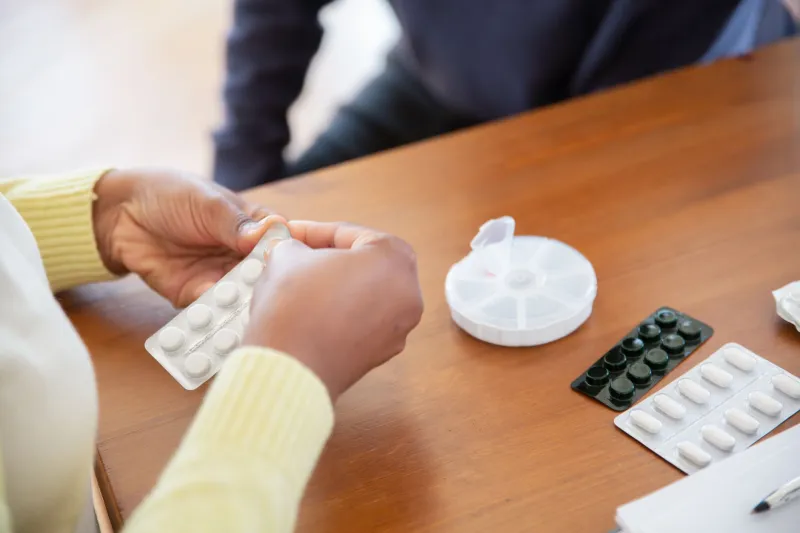
If your parent or partner got home this afternoon, resist the urge to reorganize the whole house. Do one thing: put every medication bottle — the new ones from the hospital pharmacy and the old ones from the bathroom cabinet — into a single grocery bag and set it on the dining table. Don't sort it yet. Just gather it.
The next morning, with coffee, you'll do the reconciliation. Doing it tired, at 9 p.m., is how duplicate doses happen.
While you're at it, write down the discharge date and time on a sticky note and put it on the fridge. Sounds silly. It isn't. When someone spikes a fever on Wednesday, the first question any nurse line will ask is how many days since discharge, and you will be amazed how quickly that number gets fuzzy.
The Medication Table That Prevents Most Messes
Here's the job that matters more than any other in the first 48 hours. Lay out the old bottles and the new ones side by side, and build a simple three-column list on a sheet of paper: medication name, dose and timing, and what it's for.
Three things to watch for:
- The same drug, two names. A hospital may send home a generic version of something your parent already takes under a brand name. Two bottles, one medicine, double the dose.
- The drug that was stopped. Discharge papers often quietly discontinue something — a blood thinner, a diuretic, an old acid reducer. Cross it off the list, and move that bottle out of the cabinet entirely so it doesn't sneak back into rotation.
- The one that's new and unfamiliar. Blood thinners, steroids, and antibiotics are the usual suspects. Ask the pharmacist at your local drugstore to walk you through the new one — most will do a quick consult at the counter for free, no appointment needed.
If the list and the bottles disagree, call the discharging unit or the primary care office before the first missed dose. That's a normal question, not a bother.
Book the Follow-Ups Before the Momentum Fades
There's a narrow window — usually the first day or two home — when everyone still remembers the hospital and feels motivated to make calls. Use it.
Some physicians want to see a patient within seven days of discharge, sometimes sooner. Either way, don't wait for the office to reach out. Call the primary care practice, say the words "recent hospital discharge," and ask for the first available appointment. Then put it on a paper calendar on the fridge, not just in your phone, because the person recovering may not be carrying a phone.
If a specialist follow-up was recommended, book it too, even if it's six weeks out. You can always move it. You cannot always remember it.
Post the Warning Signs Where Everyone Can See Them
Most readmissions don't start with drama. They start with a small thing nobody mentioned because nobody wanted to be a nuisance.
Write a short list on a single sheet of paper and tape it to the fridge. Keep it plain:
- Fever of 100.4°F or higher, or chills
- New shortness of breath, or trouble breathing lying flat
- Confusion, unusual sleepiness, or trouble waking
- Can't keep fluids down, or hasn't urinated in 8 hours
- A wound that's redder, warmer, more swollen, or leaking
- Chest pain, fainting, or a new weakness on one side — call 911, don't wait
Show it to whoever is home during the day — a spouse, a neighbor, a hired aide. The person recovering needs to see it too, because the first person to notice a problem is often them.
Build a Recovery Zone, Not a Sickroom
You don't need a hospital bed. You need a corner of the house where the next two weeks can actually happen.
That means: a clear path to the bathroom, a phone charger within arm's reach, water that gets refilled before it's empty, and a small basket with the things that keep getting up and walking away — glasses, the medication list, a pen, the discharge folder itself. Add a nightlight. Falls are the quiet readmission driver nobody plans for.
If stairs are involved, decide on day one whether the person is sleeping upstairs or downstairs. Moving a bedroom is annoying for a week. A broken hip is annoying for months.
The 48-Hour Check-In
Two days in, sit down for ten minutes with the folder and answer four questions honestly:
- Did every medication get taken, at roughly the right time?
- Is the pain getting better, worse, or the same?
- Is the person eating and drinking a little more than yesterday?
- Has anything happened that made you pause, even briefly?
If the answer to number four is yes, call. Not the emergency room for a mild concern — call the primary care office or the hospital's discharge nurse line, both of which exist for exactly this. Catching a brewing problem on day two is a phone call. Catching it on day nine is often an ambulance.
The folder, in the end, is just paper. The plan is you, a pen, and a fridge with a list on it.