Beyond the Number on the Scale: The Home Vitals Worth Learning as a Family
Somewhere in most American homes sits a bathroom scale that gets a lot of attention and deserves less of it. Weight is one data point—often a misleading one. Meanwhile, the numbers that genuinely predict trouble down the road, like blood pressure and resting heart rate, go unmeasured in millions of households until something goes wrong.
The good news? You don't need a medical degree or a big budget to track the vitals that matter. You need about twenty minutes, a few affordable tools, and a small notebook or a note on your phone.
Start With Blood Pressure, the Quiet One
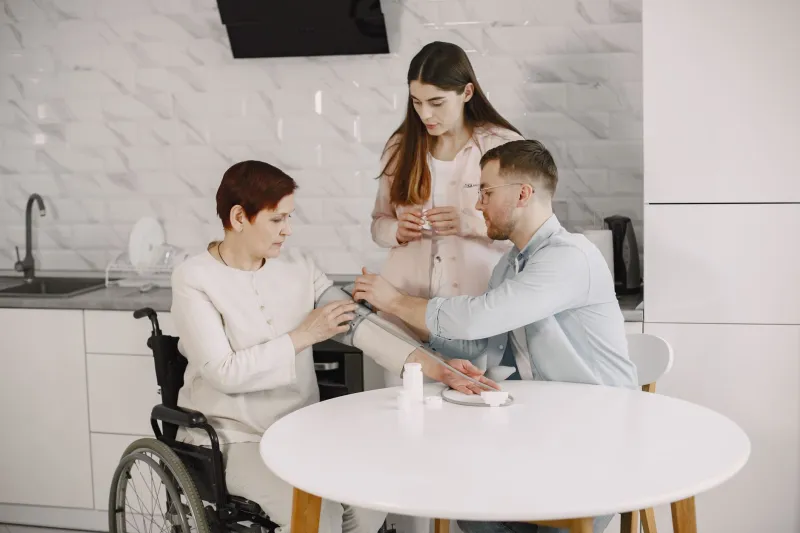
Hypertension is called the silent killer for a reason: roughly half of American adults have high blood pressure, and many don't know it. A validated upper-arm cuff—the kind with a cuff that wraps around the bicep, not the wrist—is the single best health purchase a family can make. Reliable models from Omron, A&D, or Withings run between $40 and $80, and many drugstores carry them. If cost is a barrier, plenty of public libraries and pharmacies, including many CVS and Walgreens locations, have free stations you can use.
Technique matters more than the device. Have the person sit quietly for five minutes first, feet flat on the floor, arm supported at heart level. No coffee, no cigarettes, no rushed morning. Take two readings a minute apart and write down both.
So what's normal? For most adults, you're looking for a top number (systolic) under 120 and a bottom number (diastolic) under 80. Readings consistently at or above 130/80 deserve a conversation with a doctor. For older adults, targets can differ—another reason a home log is so useful. It gives your physician a real pattern instead of one nervous reading taken in an exam room, a phenomenon so common it has a name: white coat hypertension.
Pulse: The Thirty-Second Check Anyone Can Do
You don't need a gadget for this one. Place two fingers on the inside of the wrist or the side of the neck, count the beats for thirty seconds, and double it. A resting heart rate between 60 and 100 beats per minute is typical for adults; kids run faster, and well-conditioned athletes can dip into the 40s without any problem.
What's more interesting than any single reading is the trend. If your father's resting pulse normally sits at 68 and it's been drifting into the 90s, that's worth mentioning at his next appointment. A resting rate that's suddenly high—or unusually low, with dizziness—warrants a same-day call.
Temperature Is a Trend, Not a Snapshot
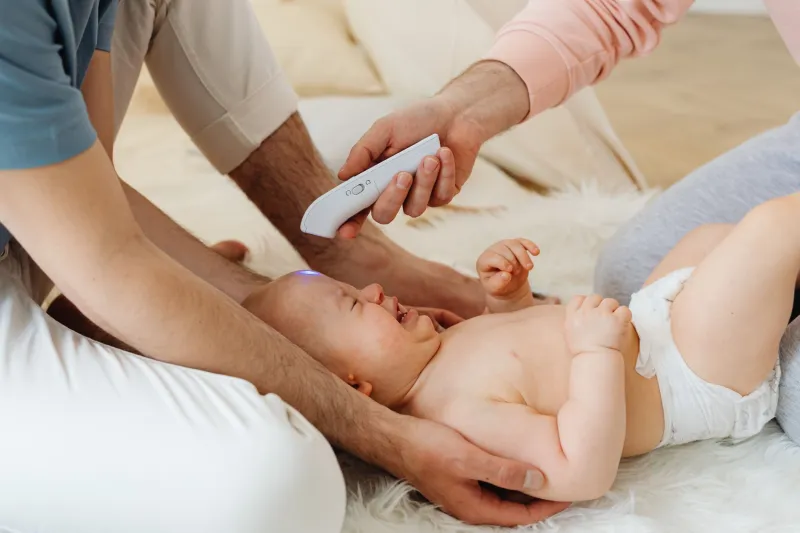
Most families already own a thermometer, but few use it strategically. A single fever reading tells you less than the shape of the curve. Is 100.4°F at 7 a.m. still 100.4°F at dinnertime, or has it climbed? For infants under three months, any rectal temperature of 100.4°F or higher is an immediate call to the pediatrician—no waiting required. For older kids and adults, the trend, the symptoms attached to it, and how the person looks matter more than the decimal point.
Keep in mind that older adults often run cooler and may never spike a dramatic fever even with a serious infection. Grandma saying she feels off with a temperature of 99.2°F deserves more attention than the number suggests.
The Surprise One: Grip Strength
Here's a vital most families have never heard of: grip strength. Researchers now consider it one of the best quick markers of overall muscle health and healthy aging, and declining grip can flag issues long before they show up elsewhere. A basic hand dynamometer costs $25 or so, but you can also keep it simple. Watch for everyday signals—jars getting harder to open, grocery bags feeling heavier, a parent's handwriting getting shakier. Any of those is worth a mention at a checkup.
Build the Log, Bring the Log
All of this only works if the numbers live somewhere you can find them. A simple page in your family health binder works fine: date, time, reading, and a note about anything unusual (missed medication, poor sleep, a stressful day). There are also free printable logs from the American Heart Association, or a plain spreadsheet on your phone.
The magic happens at appointments. Instead of saying "I think his blood pressure has been kind of high," you can slide a two-week log across the desk. Doctors love this. It turns a guess into data, and it often shortens the path to the right decision.
A few ground rules for the household: check devices against the readings at your doctor's office once a year to make sure they're still accurate, don't obsess over daily fluctuations—look at the week, not the day—and never let home tracking replace professional care. These numbers are conversation starters, not diagnoses.
The scale can keep doing its thing. But the numbers that truly watch over your family—pressure, pulse, temperature, grip—take ten minutes to gather and can quietly change the course of a decade. That's preventive health you can hold in your hands.