When the Bottles Outlive the Prescription: A Kind, Practical Guide to Clearing Out Old Meds
The drawer sticks a little. Inside: a bottle of blood-pressure pills discontinued two springs ago, a half-empty antibiotic, a painkiller from a surgery that already feels like a different life. If you’ve cared for an aging parent—or cleaned out a home after a move or a death—you know this drawer. It isn’t a sign of failure. It’s just what caregiving leaves behind.
But a drawer like that is also a small household hazard. Kids, pets, visitors, and a parent with memory changes can all find it. Some expired medications lose potency; others become risky. The good news: you don’t need a hazmat suit or a lecture. You need a plan.
Start With a Label Check, Not a Guilt Trip
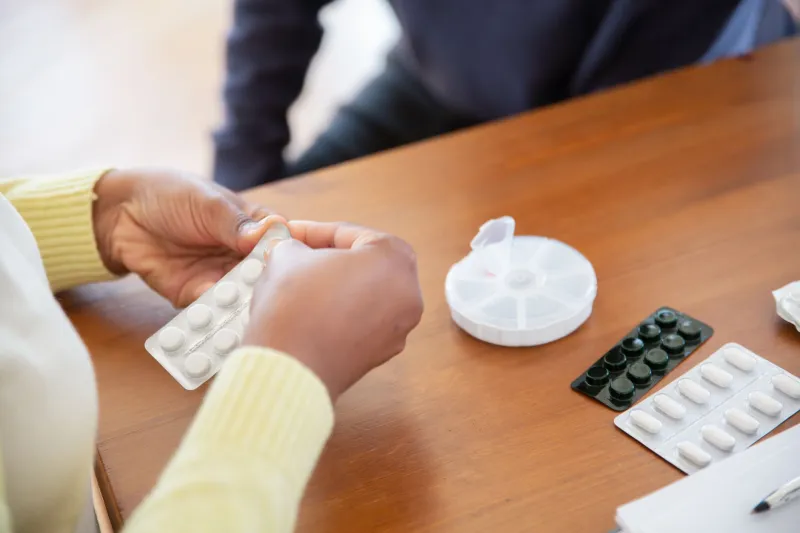
Pick a well-lit table and give yourself an hour—not a whole afternoon. Empty one shelf at a time. For each bottle, check the name, drug, strength, and expiration date. Put anything currently in use in a separate box, and keep that box out of the sorting area.
This is not the moment to decide whether you were a good daughter or a bad son. The bottle is not a report card. It’s just a bottle. If you’re unsure whether something is still current, call the pharmacist—not the family group text.
The Gold Standard: Take-Back Sites and Mail-Back Envelopes
In the US, the safest route for most unwanted medicine is a DEA-authorized take-back site. Many police departments, pharmacies, and health departments host year-round collection boxes. The Drug Enforcement Administration also runs National Prescription Drug Take Back Day each April and October, when temporary sites pop up in communities. Search the DEA’s diversion control site or call your local police non-emergency line to ask what’s nearby.
If getting to a site is hard, mail-back envelopes are a solid alternative. These are preaddressed, postage-paid envelopes from DEA-authorized vendors—some pharmacies sell them, and some county programs give them out. They’re especially useful for controlled substances, which should never go in the ordinary trash if you can avoid it.
One practical note: not every take-back site accepts liquids, sharps, or aerosol inhalers. Call first, or check the site’s listing. You don’t want to drive across town with a box of bottles only to be turned away.
If You Can’t Get to a Site: The Home Method That’s Actually OK
The FDA has guidance for the in-between situation—no take-back site nearby, no mail-back envelope in the house. For most medicines not on the FDA flush list, you can dispose of them in the household trash after making them less appealing and harder to identify.
Here’s the plain version: keep the pills in the original container, or mix them with something unappetizing like used coffee grounds, kitty litter, or dirt. Seal the container in a bag, and put it in the trash. Don’t crush or dissolve pills unless the label or pharmacist tells you to—some dust can be harmful. And don’t rinse the bottle and leave it loose in the recycling bin.
This method is not perfect, but it’s far better than leaving old opioids in a bedside drawer for years.
When Flushing Is the Right Call—and When It Isn’t
Flushing is the exception, not the default. The FDA keeps a short “flush list” of medicines that are so dangerous—fatal in a single dose, especially to a child—that the small risk to water systems is outweighed by the risk of leaving them in the house. Fentanyl patches and certain strong opioids are on that list. Check the current FDA flush list before you pour anything down the toilet. For everything else, flushing is discouraged.
Strip the Labels, Then Let Go
Before empty bottles go into recycling or trash, remove the label or black out your parent’s name, the prescriber’s name, and any prescription number. A permanent marker works; so does peeling the label off and shredding it. Empty bottles with personal information still tell a story you don’t need to share with the curb.
The Controlled-Substance Wrinkle
If you’re staring at a bottle of oxycodone or a fentanyl patch, slow down. These are the medicines most likely to be misused, and they’re the ones take-back programs are designed for. Don’t give them to a friend with a bad back. Don’t save them “just in case.” If a hospice or home-health nurse is involved, ask them directly about disposal—they often have a protocol.
A Short Checklist for the Drawer
- Gather every bottle into one box, including the ones in the kitchen, the car, and the bathroom.
- Separate current medications and put them somewhere secure.
- Check expiration dates and set aside anything discontinued or unlabeled.
- Find the nearest DEA take-back site or order a mail-back envelope.
- For non-flush-list medicines with no take-back option, use the trash method above.
- Strip or shred labels before recycling or trashing empty bottles.
- Store the remaining current medicines in a locked box, not a high shelf.
You Don’t Have to Do It All at Once
Clearing a drawer of old prescriptions can be oddly emotional. Those bottles are little time capsules—the antibiotic from the winter Mom broke her hip, the eye drops from the summer Dad still drove. If it feels like too much, do one shelf. Ask a sibling to sit with you on speakerphone. The goal isn’t a Pinterest-perfect medicine cabinet. The goal is a safer house and a lighter chest.
If you ever suspect someone has swallowed the wrong medicine, call Poison Control at 1-800-222-1222. It’s free, confidential, and available 24/7. For everything else, start with one bottle. The drawer can wait another week, but the plan can start today.